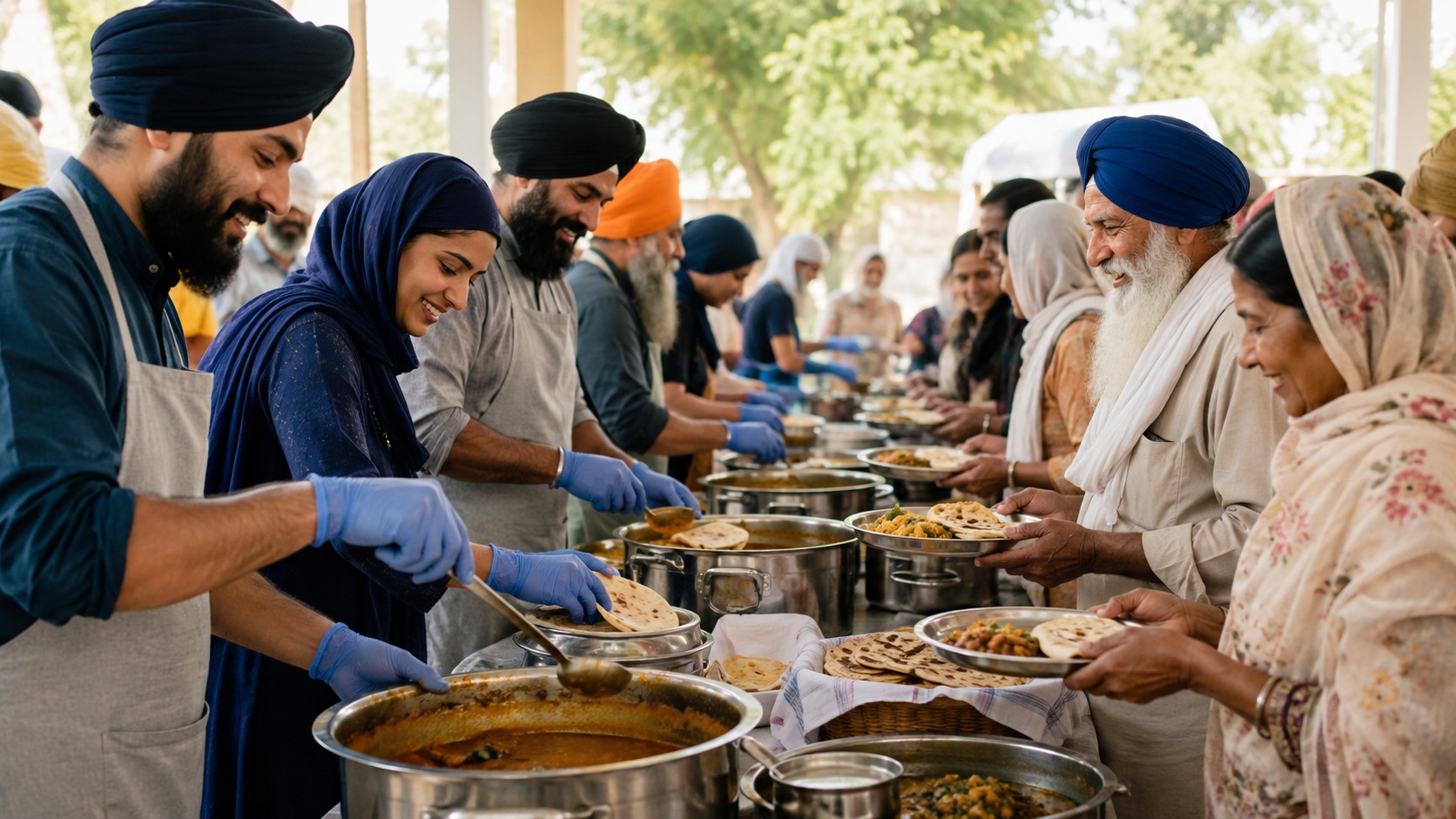
Langar, Dasvandh and the Spirit of Giving
Sewa means selfless service — helping others with humility, equality and compassion, without expecting anything in return.
Its roots go back to the teachings of Guru Nanak Dev Ji, who encouraged people to live truthfully, work honestly and share with others. In Sikh tradition, service was never separate from faith. It was part of daily life.
The roots of sewa
Guru Nanak Dev Ji taught that every person has equal dignity, regardless of caste, wealth, gender, background or status.
His teachings are often connected with three principles:
- Naam Japo — remember the Divine
- Kirat Karo — earn honestly
- Vand Chhako — share with others
Together, these values shaped sewa as a way of living with honesty, care and responsibility.
Langar: equality through food
One of the clearest examples of sewa is Langar, the free community kitchen.
In Langar, everyone is welcome. People sit together, eat together and are served without discrimination. It is more than a meal — it is a message of dignity, equality and belonging.
Dasvandh: giving back
Another important Sikh practice is Dasvandh, which means setting aside a portion of one’s earnings for community welfare and service.
Through Dasvandh, Sikh communities support Gurdwaras, Langar, education, welfare, disaster relief, youth programs and many other services. It is not only about money; it is also about giving time, skills, care and effort.
Sewa for all
At the heart of Sikh service is Sarbat Da Bhala — the wellbeing of all.
This reminds us that sewa is not limited to one group or community. It is for humanity. That is why Sikh organisations often serve beyond religious and cultural boundaries through free meals, food relief, education and welfare support.
SendSewa and the future of giving
SendSewa is inspired by these Sikh values. By connecting Sikh charities, Gurdwaras, donors, volunteers and community organisations, SendSewa helps make sewa easier to discover, support and share.
Through Langar, Dasvandh and everyday acts of service, Sikh communities show that giving is about building a world where everyone is treated with dignity, care and belonging.
Sewa begins with one simple choice: to care.
Leave a Reply